When it rains, look for rainbows, when it’s dark look for stars
~ Oscar Wilde
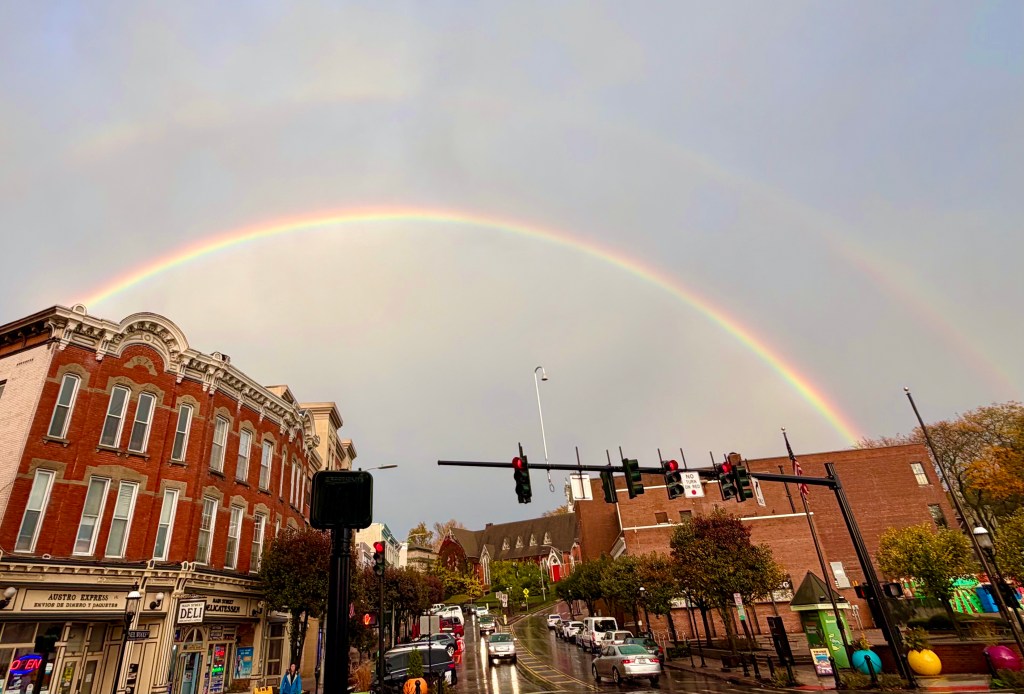
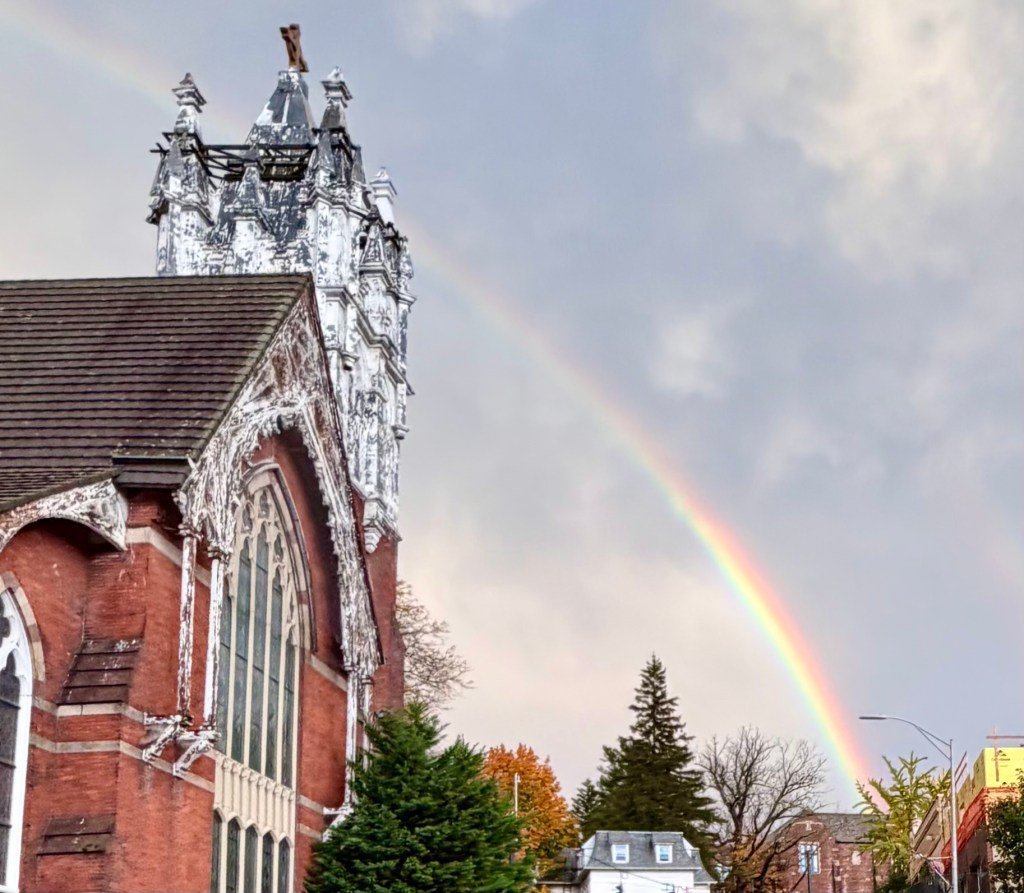
I remember the day I took these pictures. It was one of those difficult days when everything felt exhausting and everything seemed like a struggle. It had been a rainy, windy day but by late afternoon, the clouds were starting to break and a bit of sunshine was starting to peek through. I was kind of preoccupied – just trying to get through the next thing on my list, focused inward.
My son Luke and I had just walked out of a store and turned up the street when he stopped me and directed my attention toward the sky. I stopped in my tracks, staring in total awe at this incredibly perfect rainbow arching over my town (the pictures do not do it justice!). I was flooded with that feeling you get when you unexpectedly see something amazing. The dark mood and exhaustion I’d been carrying around all day flipped into joy so suddenly that I was almost dizzy from it! That kind of unexpected and rare beauty wakes up a troubled mind like a spark of fireworks in the best way.
Did you know that rainbows are actually kind of rare? It takes a very specific set of conditions to produce a rainbow. The sun must be directly opposite of floating water droplets and there must be enough of a break in the clouds to let sunlight through. A rainbow isn’t a tangible object and doesn’t actually “exist” in a certain place. It’s actually an optical illusion that only appears when small raindrops in the atmosphere, sunlight and the position of the viewer line up just right, between 40 – 42 degrees below the source of sunlight.

Sunlight is actually composed of all the colors of the rainbow but when combined, our eyes see only white light. When sunlight enters water droplets floating in the sky, it bends (refracts) at a 42-degrees angle and then disperses into the beautiful individual bands of colors that we are able to see in a rainbow.
Fun facts:
-  Rainbows are actually circular! We see a rainbow as an arch from the ground, but if   you are fortunate enough to see a rainbow from above, like from an airplane, it will appear circular. This is because they are made from sunlight hitting spherical water droplets which cause the colors to disperse in a rounded shape. Maybe this is why we never find the "pot of gold at the end of a rainbow" - it's continuous and has no end!

-  Most rainbows are actually double rainbows! But you can't always see the fainter secondary rainbow arching over the brighter one. The secondary rainbow forms when sunlight reflects twice inside a raindrop and exits at a wider angle - 50 degrees instead of 40-42. This causes the second, fainter rainbow to appear over the first one. Sometimes it's so faint that you can't see it, but it's nearly always there.

If you aren't able to see the double rainbow, maybe just believe its beauty is out there, existing somewhere our eyes can't see.

Rainbows are exceptional, beautiful, fleeting weather events. If you're lucky enough to see one, maybe take the time to stop, breathe and appreciate its rare beauty.

If you are interested in a more in-depth explanation in the science behind rainbows, click here and here.

 Anne Charlotte Photography
I’d love to hear your thoughts