There is only one happiness in this life, to love and be loved.
~ George Sand
Valentines Day — I have mixed feelings about this one. It’s a basically a “Hallmark Holiday”, full of strategic marketing ploys designed to pressure people into showing love and affection by purchasing grocery store roses and cheap chocolates while picking up toothpaste and Pepcid at CVS.
But showing love, affection, kindness, and respect should be a year-round thing—not just a February 14th ritual, right? Don’t get me wrong—I definitely have a gooey, soft, romantic center under this harsh, cynical talk. I guess I’m just more drawn to authenticity and genuine displays of affection rather than the gimmicky stuff. That being said, Valentine’s Day is a holiday meant to promote love, friendship and all those good, warm, positive feelings. So I’ll play nice… and even bake cookies for my co-workers and make a special treat for my kiddo.

So when did Valentine’s Day become a thing anyway?
Well, I’m a curious history nerd, so of course I looked it up! Let’s dive in—a brief history of the origins of Valentine’s Day.
Its roots are pagan. The OG Valentine’s Day was called Lupercalia—a festival of fertility celebrated in Ancient Rome on February 15. The holiday was dedicated to Faunus, the Roman god of agriculture, and Romulus and Remus, the founders of Rome.
The Lupercalia festival included animal sacrifice and lightly thwacking crop fields and women with goat hides dipped in goat blood. Wow. Brutal! But I guess, nothing says love more than being flogged with a goat hide soaked in blood. If you’re an ancient Roman citizen, anyway.
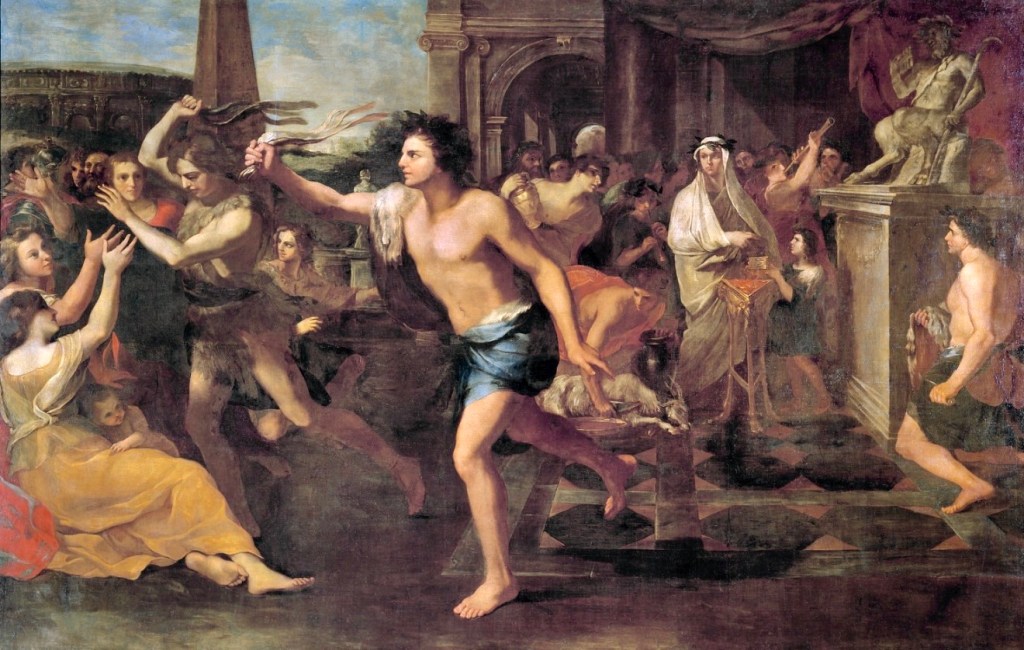
Andrea Camassei – 1635
Let’s jump ahead a few centuries. In the 5th century, Pope Gelasius officially converted the holiday from pagan to Christian by outlawing Lupercalia celebrations. The name St. Valentines Day comes from a martyred saint by the name of…well…Valentine! Except, there were actually two martyred saints by the name of Valentine—one from Rome and one from Terni. The Roman guy was known for performing marriage ceremonies on the sly for Roman soldiers who were banned from marrying. The Terni guy helped Christians escape a Roman prison and ended up falling in love with the daughter of the warden—leaving her a note signed “From your Valentine”. Very sweet!
Sadly, both St. Valentines met rather unfortunate ends at the decree of Roman Emperor Claudius II.
As for which of these stories is at all historically accurate, even in small detail, who knows? But they’re still cute—possibly not quite so true—stories to share.
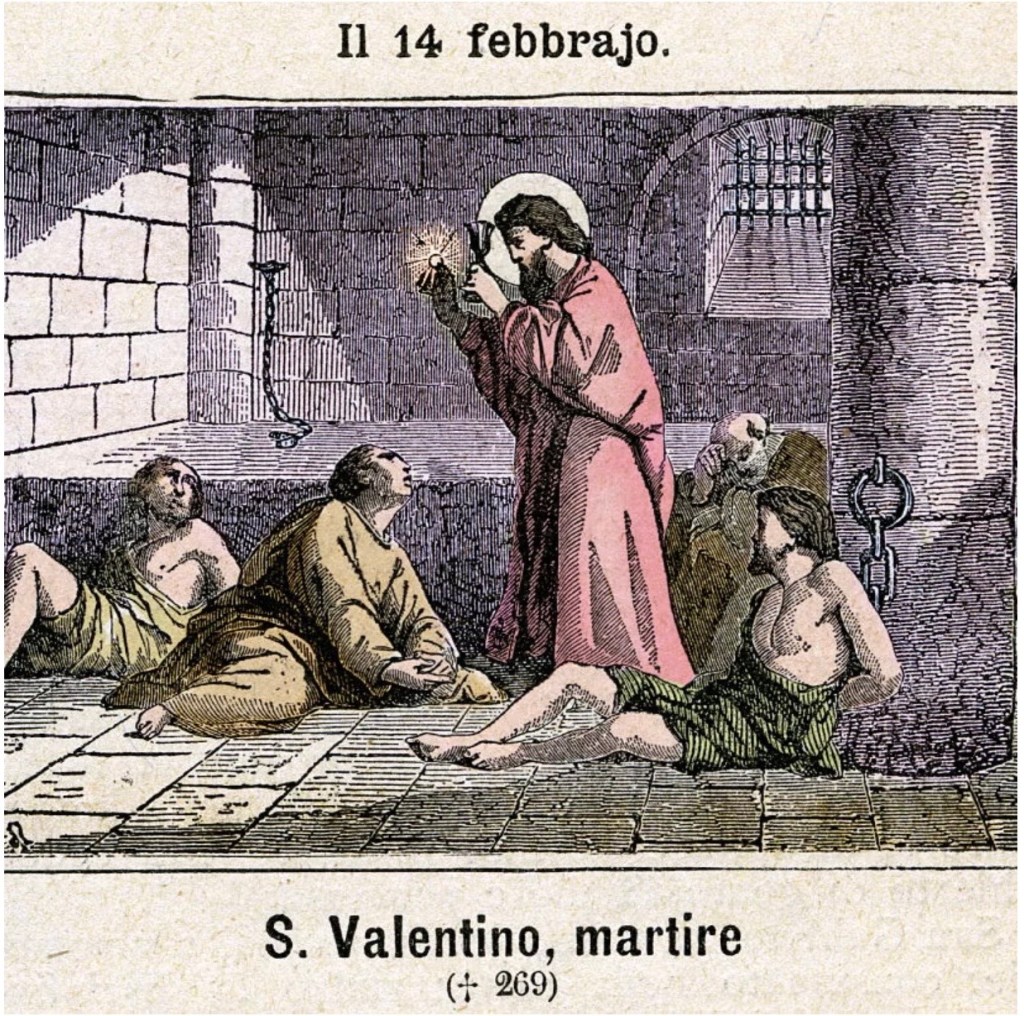
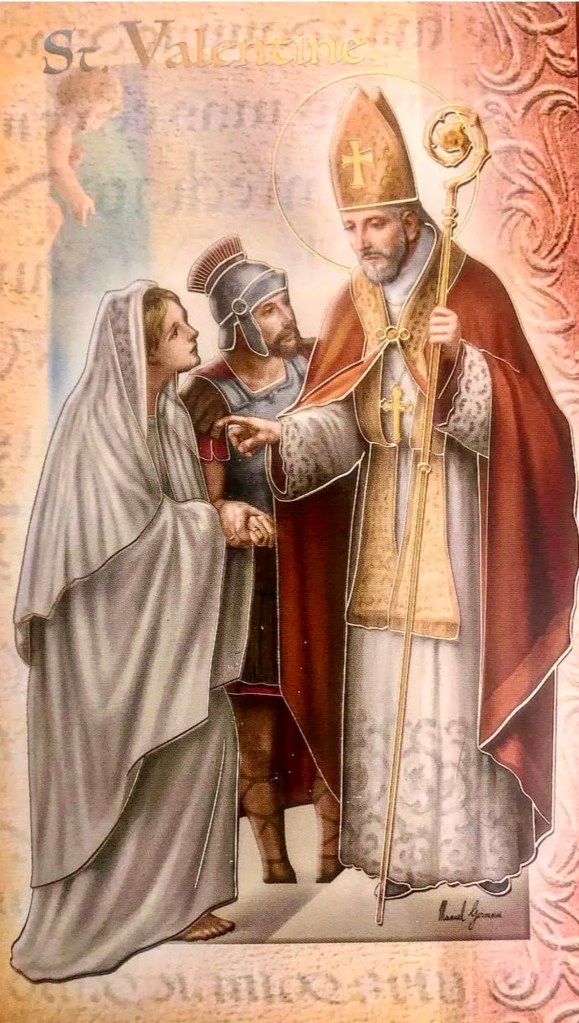
prayer card
Valentine’s Day became a bit more romantic in the traditional sense in the Middle Ages. February 14 was thought to be the start of mating season for birds and was chosen as the date to commemorate St. Valentine.
English poet Geoffrey Chaucer helped solidify the holiday as a day of love with his 1375 poem Parlement of Foules, in which St. Valentine and Cupid are mentioned several times. The 700-line poem tells a whimsical, dreamlike story in which a trio of noble eagles gather in a garden on St. Valentine’s Day to debate which of them should win the hand (or wing?) of the lady eagle—while a whole chorus of other birds chimes in with their opinions on the matter. Here’s an excerpt:
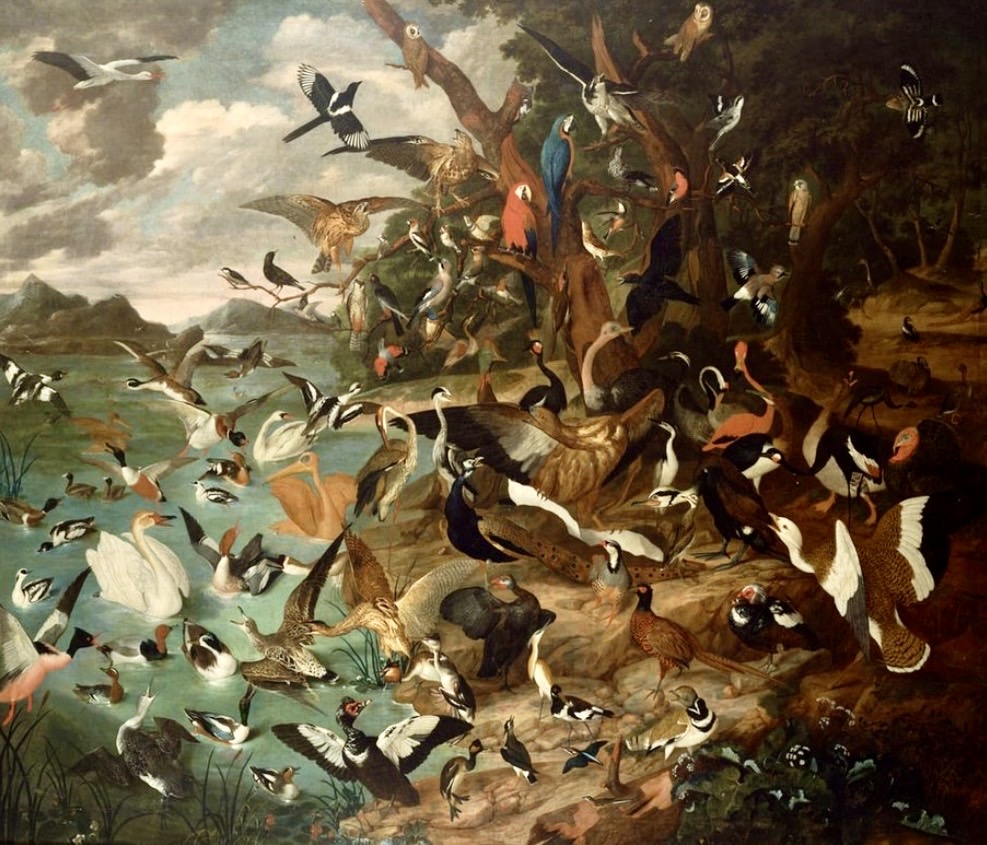
Karl Wilhelm de Hamilton (1668 – 1754)
Parlement of Foules
For this was on Seynt Valentynes day,
Whan every foul cometh ther to chese his make,
Of every kinde, that men thynke may;
And that so huge a noyse gan they make,
That erthe and see, and tree, and every lake
So ful was, that unnethe was ther space For me to stonde, so ful was al the place.
~ Geoffrey Chaucer
Parliament of Fowls (modern translation)
For this was on Saint Valentine’s day,
When every fowl comes there his mate to take,
Of every species that men know, I say,
And then so huge a crowd did they make,
That earth and sea, and tree, and every lake
Was so full, that there was scarcely space
For me to stand, so full was all the place.
~ Geoffrey Chaucer
So what about Cupid? How did the kid get involved?
Rewind to the pagan days of Ancient Greece. Eros was the Greek god of love, depicted as a young, handsome, virile man who had the power to make people fall madly in love with each other. The Romans adopted Eros as one of their deities and rebranded him as a pudgy little boy with a fondness for archery, naming him Cupid. He still had the power to spark romance—armed with his cute little set of bow and arrows to accomplish the job.
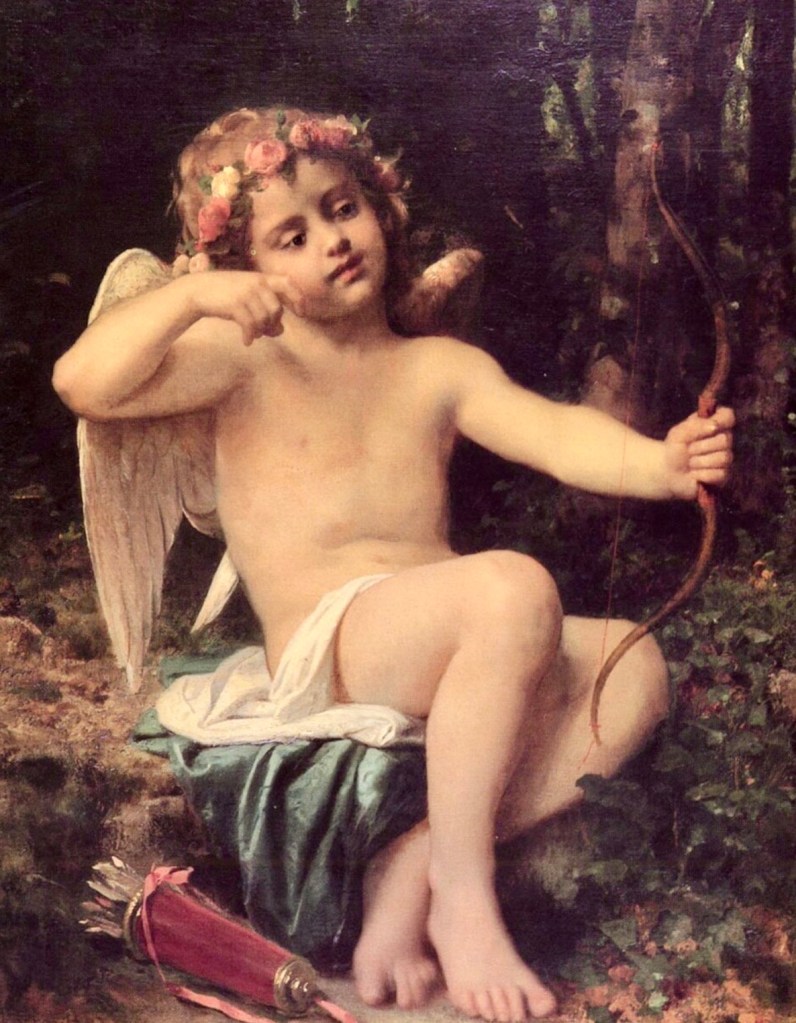
Léon Jean-Bazile Perrault (1832 – 1908)
I guess everyone was pretty smitten with Cupid, since his popularity spans millennia.
He’s still around today, decorating our Valentine’s Day cards and wall decorations.
Valentine’s Day and its “Hallmark Holiday” beginnings.
Even though Valentine’s Day notes or letters have been around since the 15th century, it wasn’t until the 1840s that cards became mass produced and marketed specifically for the holiday. Victorian Valentine’s cards were elaborately decorated with hearts, flowers, cherubic little cupids, and touches of ribbons and lace.
If you were at a loss for words, you could even purchase a Valentine Writer—a small booklet with sweet phrases and poems to use in your cards. I suppose nowadays we might just ask ChatGPT for that!
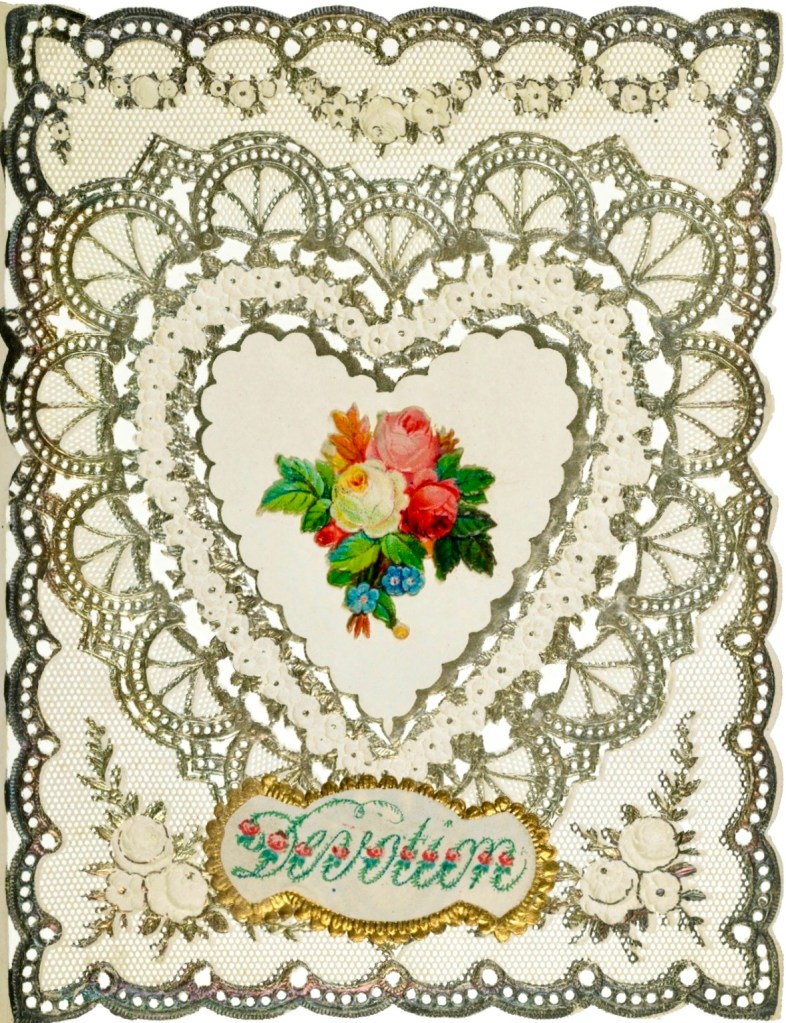
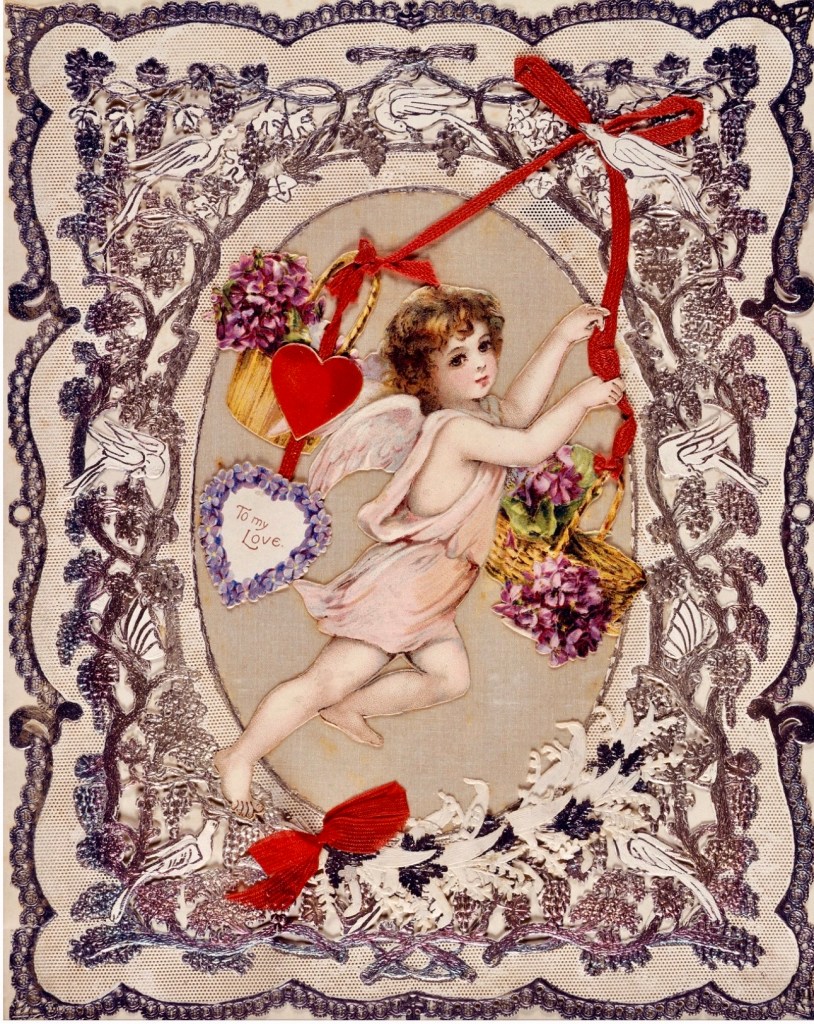
Aside from offering cards, many also gift flowers and candy. Red roses have long been a symbol of romantic love and passion, with pink being a solid runner-up—symbolizing admiration, joy, and gratitude (meh — I prefer yellow roses.)
The heart-shaped candy box can be attributed to Richard Cadbury, son of the founder of Cadbury Chocolates. It was a marketing gimmick in 1861 to increase sales. And it definitely took off and stuck around. It’s estimated that 58 million pounds of chocolate are sold each year for Valentine’s Day!
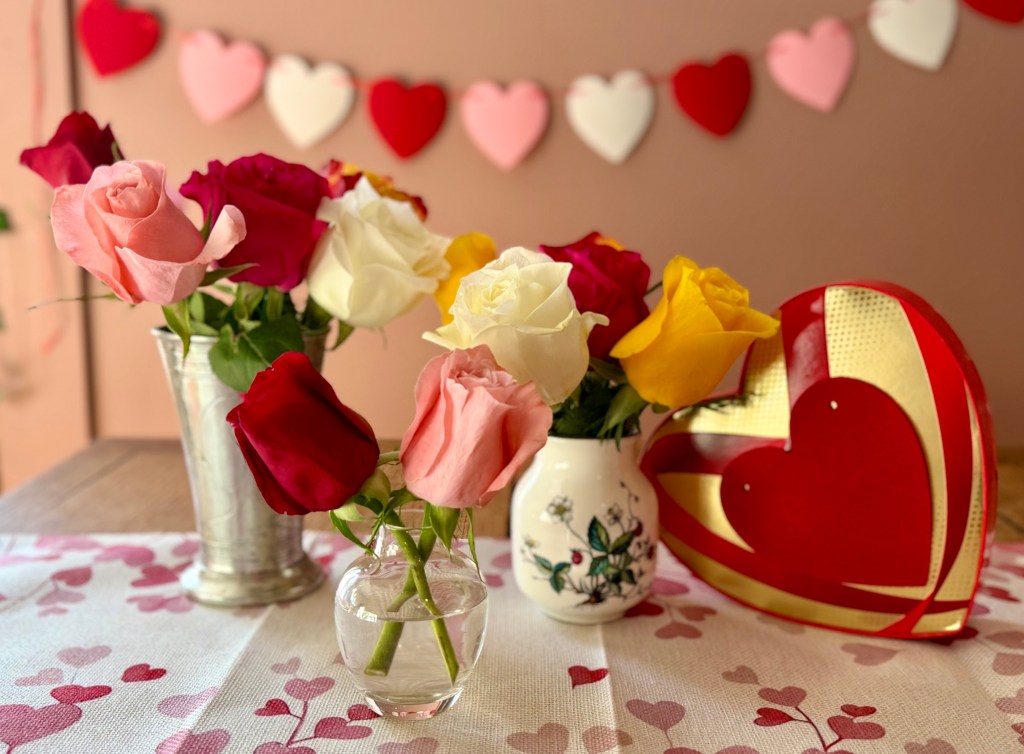
So that’s a very brief history of one of my not-so-favorite—but well-intentioned—Hallmark Holidays.
However you intend to celebrate (or not), whether that’s exchanging cards with your kids, baking cookies for your coworkers, giving a heart-shaped box of chocolates to your special person, having a Galentines Day night out with the girls, or celebrating the alternative holiday International Quirkyalone Day (yep – that’s a thing), I wish you all a day filled with happiness, friendship, and loving vibes.
Because what it all comes down to at its most basic level is…
All you need is love.
~ The Beatles
Happy Valentines Day!

 Anne Charlotte Photography
I’d love to hear your thoughts