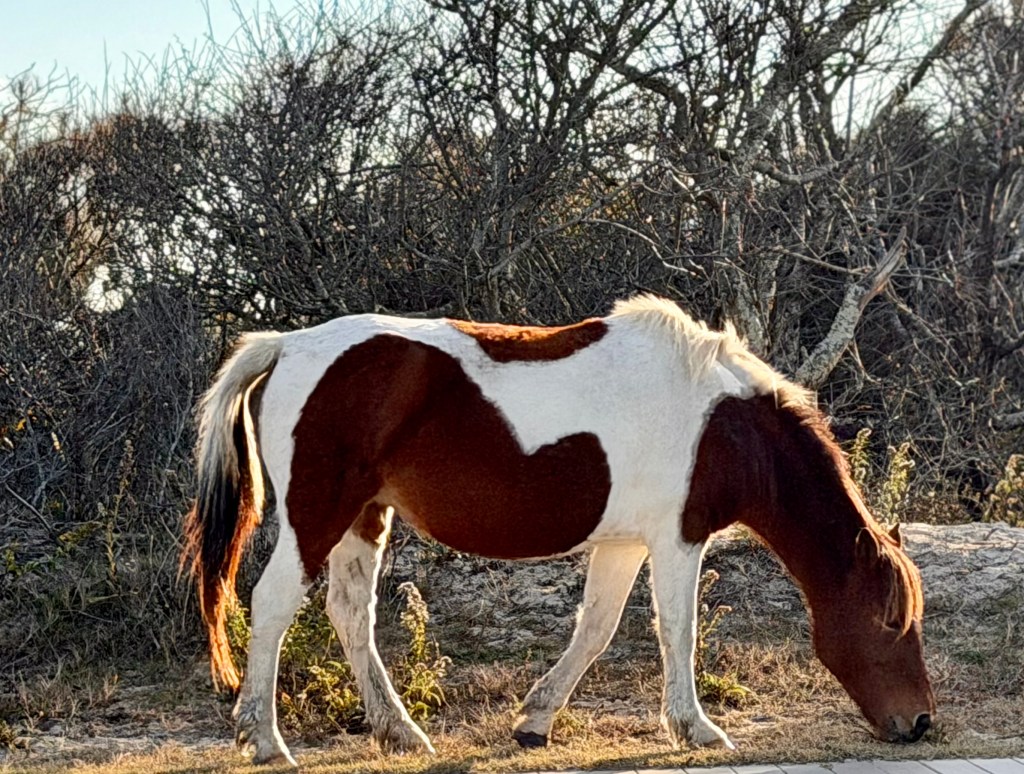
My son Luke and I took a little road trip to Maryland and Virginia this week. Our first stop was to see the wild horses that live on Assateague Island – a long strip of barrier island that spans parts of both Maryland and Virginia. When I was a little girl, my family and I traveled through this area and explored Assateague Island to look for the wild horses that call it home. I have only a few vague memories of that trip but one memory stands out: walking along a sandy path near the beach and seeing a small group of horses grazing off to the side. I was completely enchanted!
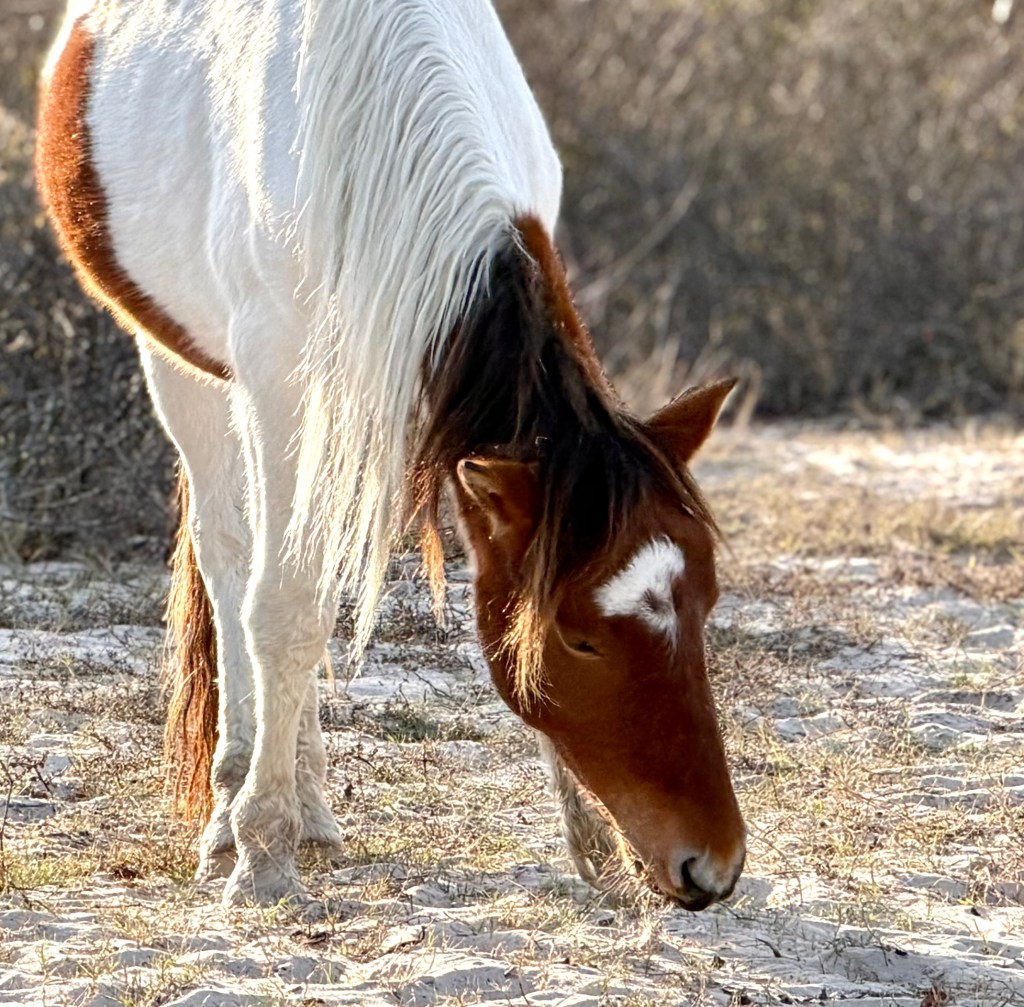
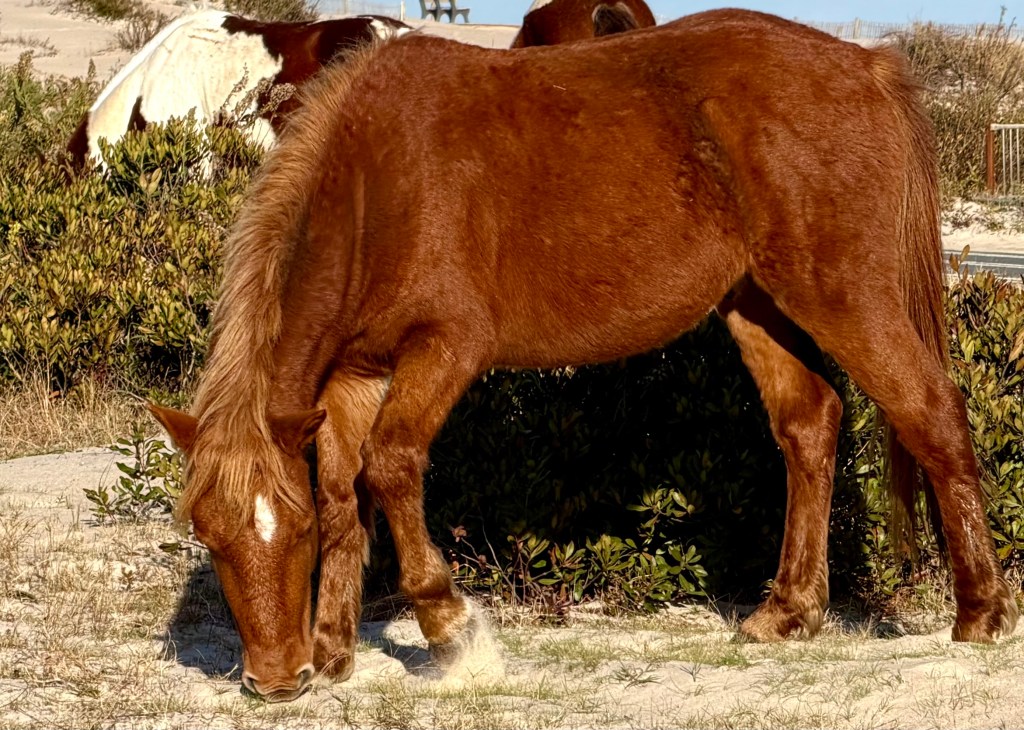
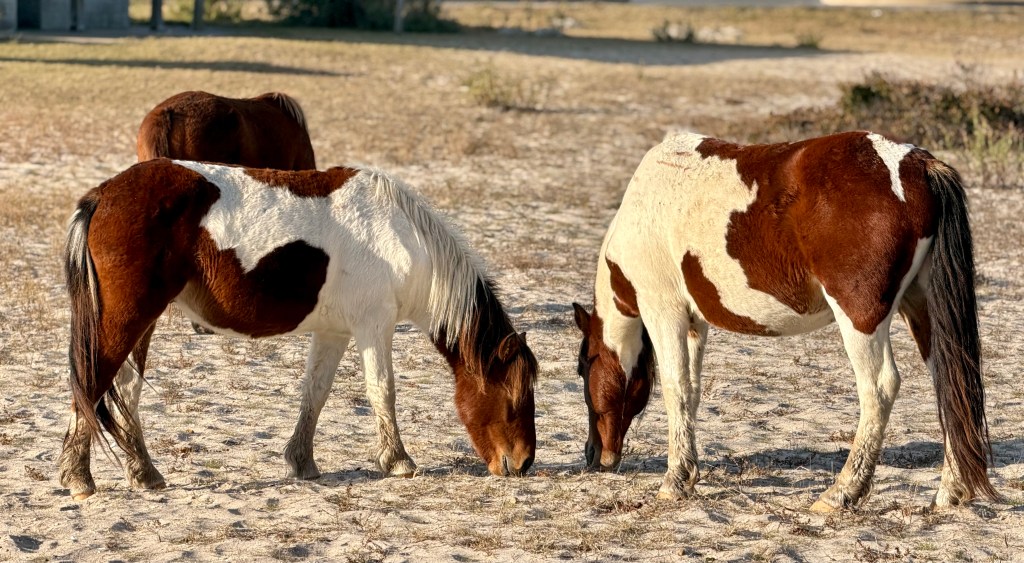
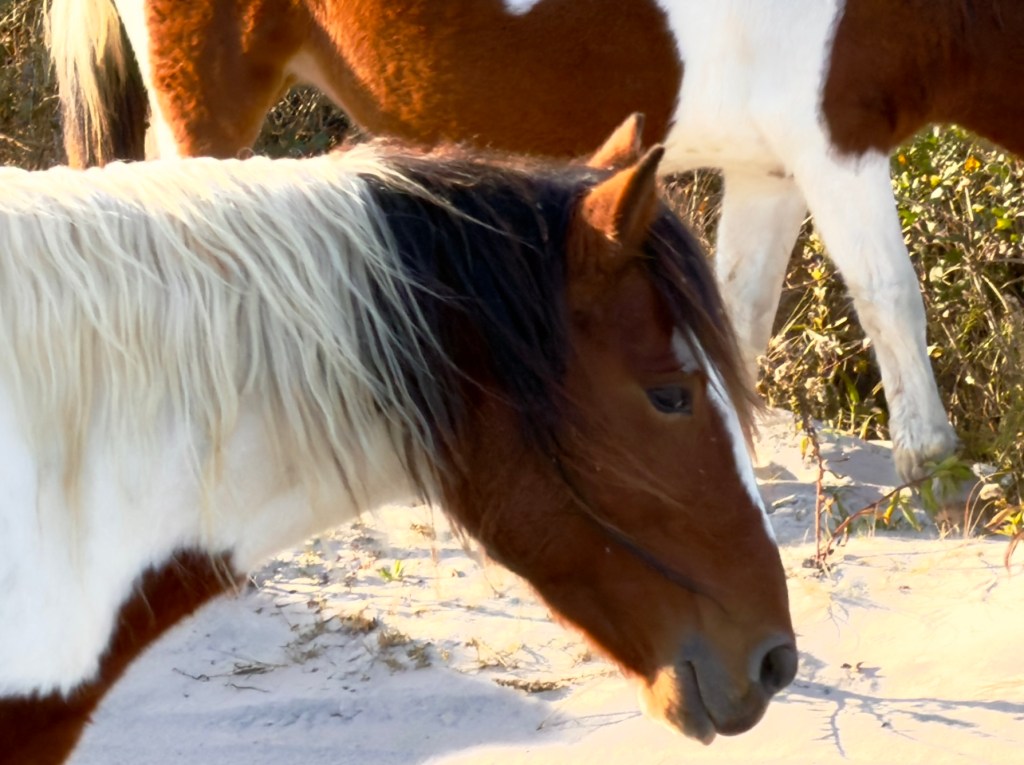
Maryland Herd – Assateague Island
Assateague Island was designated a National Seashore in 1965 and is managed by the National Park Service. Two herds live on the island – one in Maryland and one in Virginia. The herds are separated by a fence at the state line and do not intermingle. The Maryland herd is managed by the National Park Service while the Virginia herd is owned and managed by the Chincoteague Volunteer Fire Company.
Generations of horses have lived on Assateague Island since around the 16th – 17th century. While commonly referred to as “wild” horses, they are technically feral – the difference being that their ancestors were once domesticated animals. There are a few popular theories and legends about how these horses came to live on Assateague – all of which are still up for debate. One legend claims they’re descended from Spanish horses that were shipwrecked off the coast of Virginia in the 16th century while en route to Peru. A less dramatic and romantic theory states that mainland farmers in the 17th century brought their livestock to Assateague to avoid taxes and fencing laws – today’s herds descending from those horses. Another theory is a blend of the two: a mix of shipwreck survivors and livestock tax evasion.

In 1947, the beloved children’s book Misty of Chincoteague by Marguerite Henry was published. Its success helped popularize the wild horses of Maryland and Virginia. The book, based on a true story, is set on neighboring Chincoteague Island in Virginia at the time of the annual Pony Penning.
Each July since the mid-1800’s, the Chincoteague herd has taken part in the annual Pony Penning Festival. During this event, all of the Virginia herd’s horses and foals are rounded up by the fire company’s “Salt Water Cowboys”. The horses are herded to the channel between Assateague and Chincoteague during the calm slack tide and swim across. The first foal to reach shore is crowned King or Queen Neptune and raffled off. Once all the horses have crossed, they are herded to pens at the carnival grounds. Most of the foals are auctioned off to be raised as domestic horses while the adult horses are returned to Assateague at the end of the multi-day festival.
(For more about the history of Assateague Island, click here.)
(For more about the horses of Assateague and the Annual Chincoteague Pony Penning, click here and here).

When exploring Assateague Island, Luke and I were lucky to have a couple of beautiful November days – crisp but not too chilly. On the Maryland end, there are three lovely trails to walk: the Life of the Marsh Trail, Life of the Forest Trail and Life of the Dunes Trail. Each one ranges from a half to three-quarters of a mile. The first two are mostly boardwalk, while the dunes trail is soft sand. There are also a few beach access points along the main road.
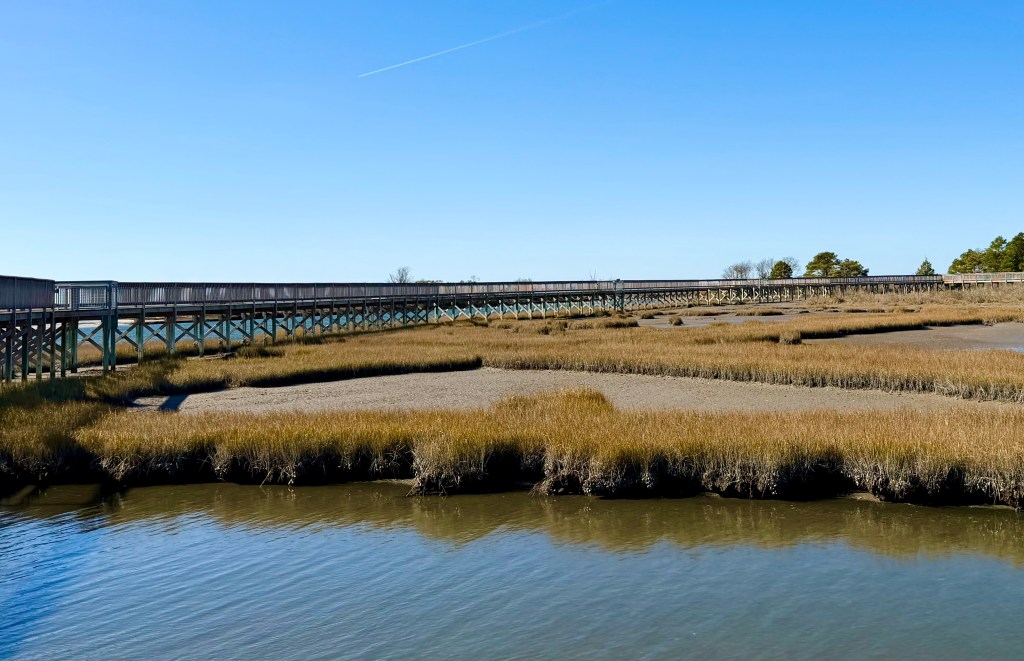
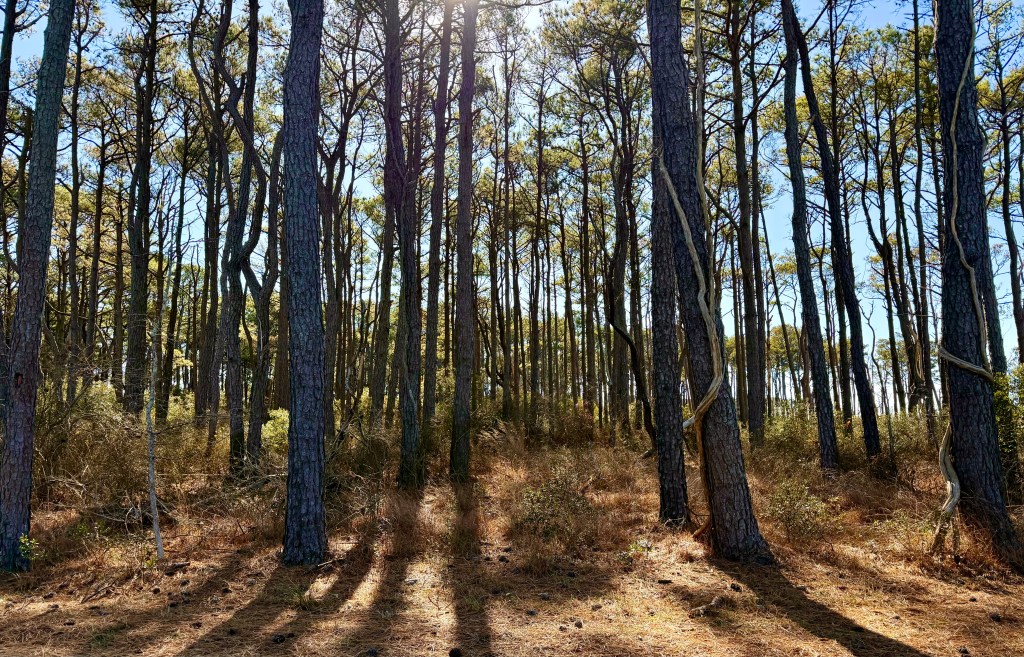
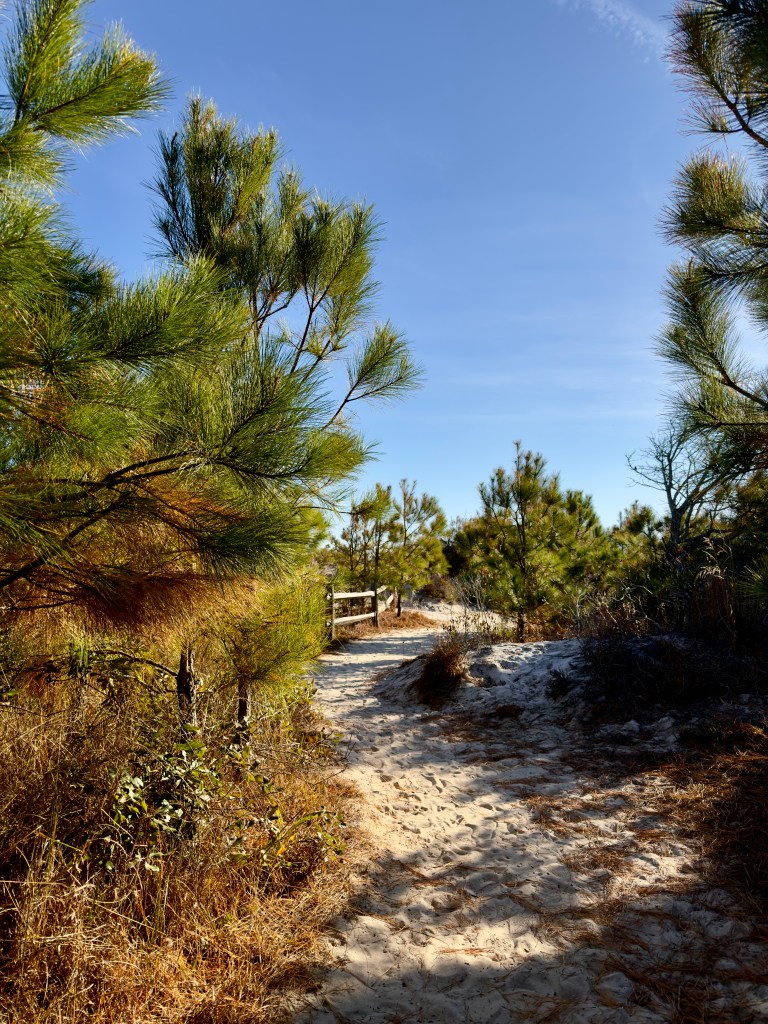
Because it’s off-season, the island felt quiet, peaceful, wild and naturally beautiful – I felt my tense muscles relax and I was able to let out a long held breath.
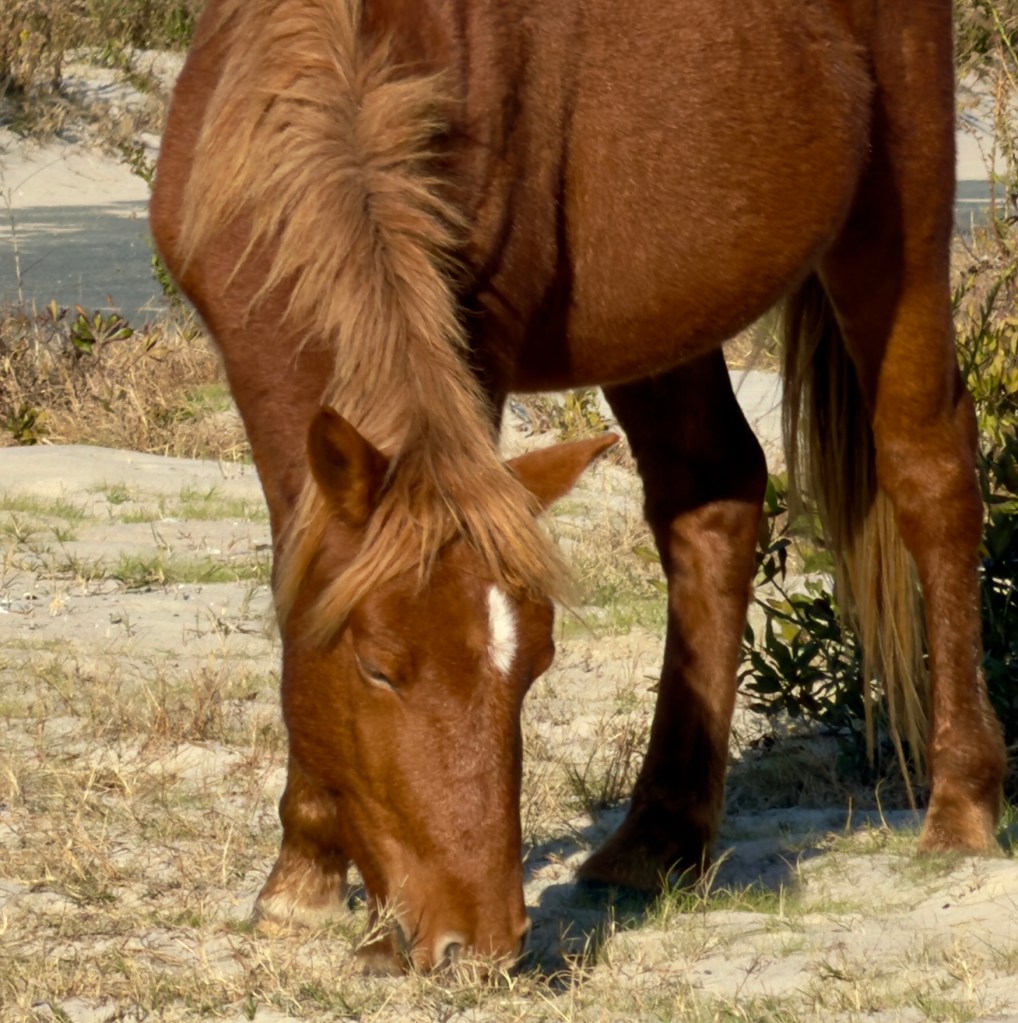
As we explored the trails, we saw evidence of the horses everywhere but didn’t spot any. We explored the beach last and that is where we found a small group of five horses. It was late afternoon and the sun was low in the sky. We walked up the boardwalk to North Beach and that is where we finally found them – walking among the dunes. A big reward for our patience! They were such a beautiful site to see – so calm and docile. They were totally unbothered by our presence, but of course we kept a safe distance. We watched them wander and graze the scrubby bits of grasses on the dunes and followed them as they wandered down the boardwalk to the parking area. I took so many pictures, I had to cull them three times!

The next day, we explored the Virginia end of Assateague Island. Since there is no road that connects the two halves of the island, we drove about an hour south on the mainland and crossed over to Assateague Island at Chincoteague. The Virginia end of the island also has beautiful walking paths: the Woodland Trail, the Swan Cove Trail and the Lighthouse Trail -mostly paved and ranging from about a quarter mile to a mile and a half.
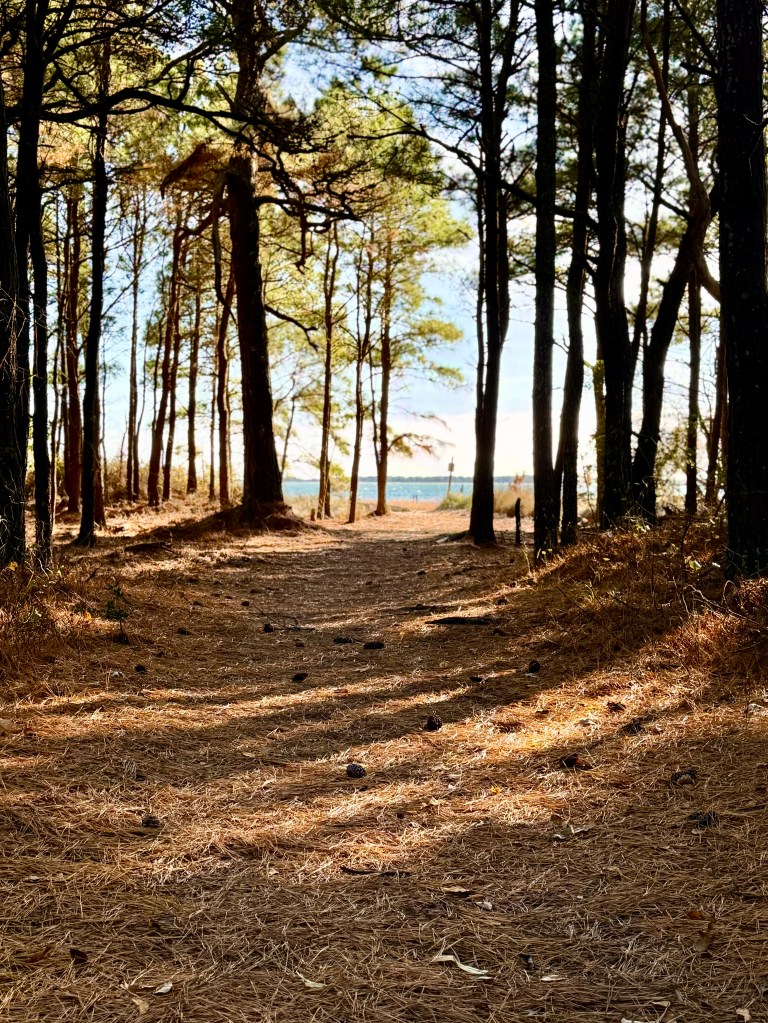
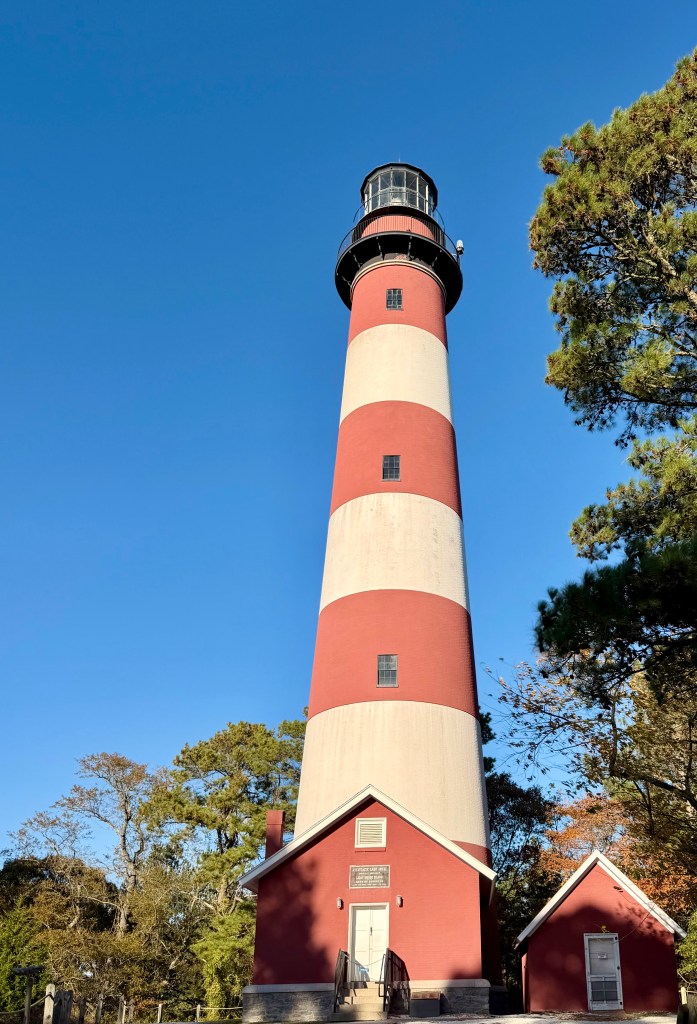
Lighthouse Trail
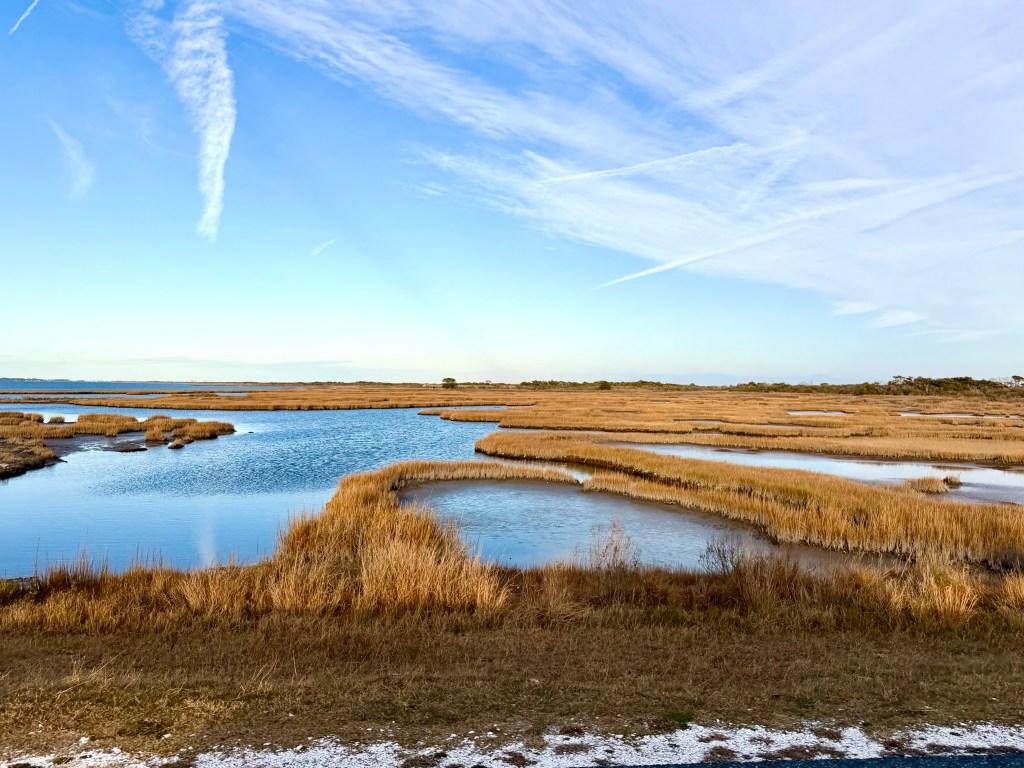
There is also The Wildlife Loop – a paved road just over three miles long that you can walk or bike during the day and drive after 3 p.m. The trails are so quiet and peaceful – winding under the Loblolly pines, breathing in the fresh pine scent, listening to the breeze as it rushed through their long needles and occasionally coming to a viewing area over a marsh where we were able to see horses in the distance or to a short path through the Loblolly pines, softly carpeted with fallen pine needles, leading to a small beach on Tom’s Cove scattered with driftwood and molted horseshoe crab shells.


I am so glad Luke and I made Assateague Island a part of our little road trip. I felt just as enchanted with the island and its wild horses as I did when I was a little girl. If you ever have the chance to travel to this little corner of the world, I highly recommend a visit to Assateague Island! The natural, untamed beauty of the salt marshes, pine forests, wild beaches and roaming wild horses are unforgettable.
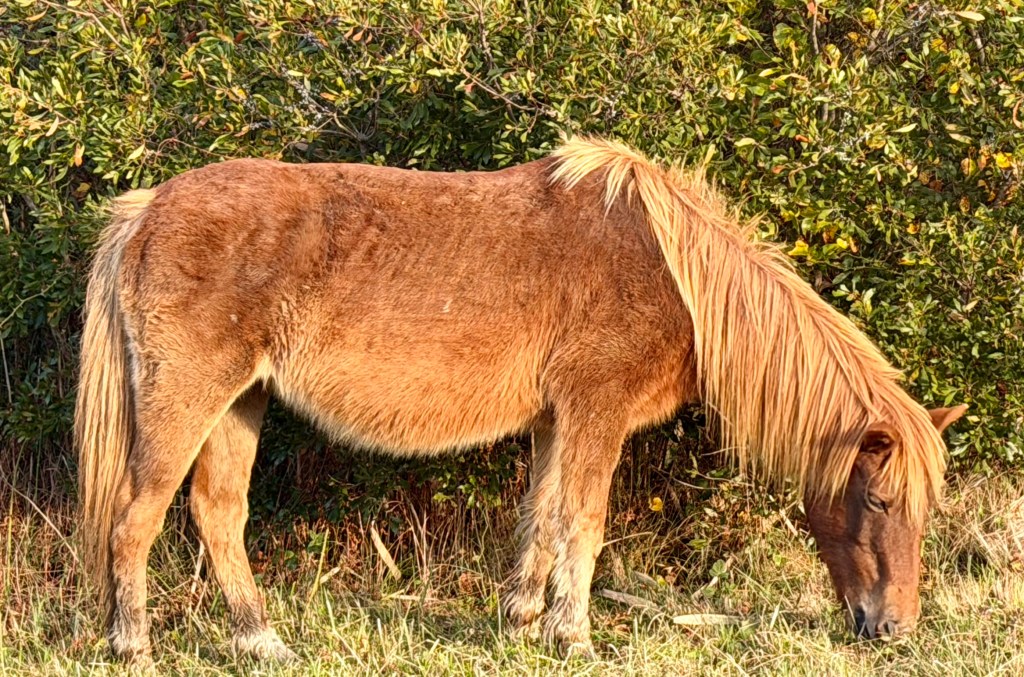
Chincoteague National Wildlife Refuge –
Assateague Island, Virginia
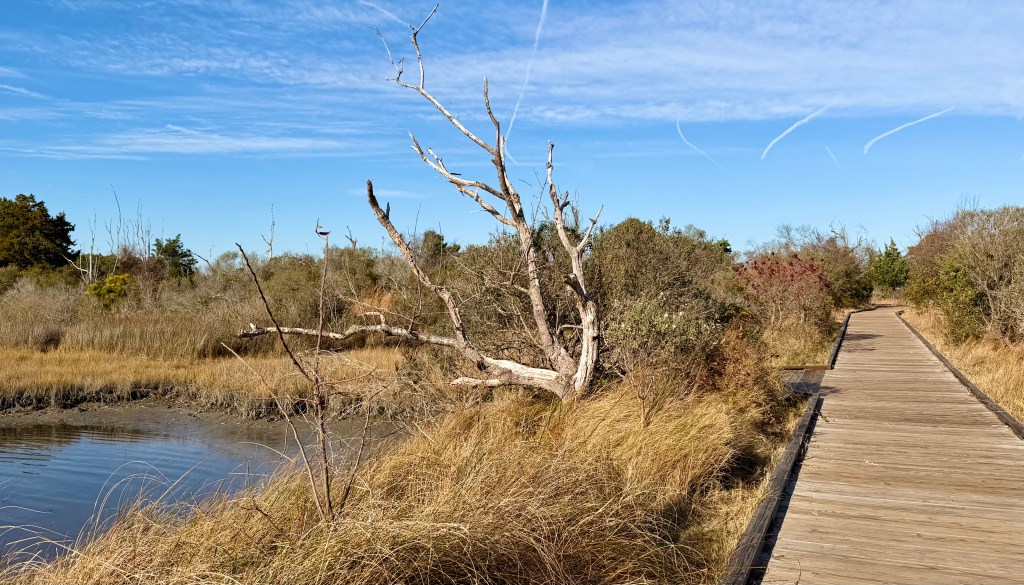
Assateague National Seashore, Maryland
If you like these photos, you might also enjoy my Beaches Gallery and my Stone walls, Roads and Paths Gallery.

 Anne Charlotte Photography
I’d love to hear your thoughts